
Kocha.
A role-based mentorship platform with real-time chat, structured programs, and a data-driven navigation resolver serving three distinct user types from a single application shell.
- Role
- Lead Frontend Engineer
- Year
- 2026
- Sector
- Mentorship
- Status
- Live
Stack
Overview
Kocha is a mentorship platform that connects mentees with mentors, tracks goals, runs sessions, and builds community around it all. It serves three user types — admins, mentors, and mentees — each with their own tailored experience, from a single shared application shell.
I built the frontend as the sole developer, from the design system to the real-time chat.
Three roles, twenty-plus pages, one cohesive product — driven by who's signed in, not forked for each audience.
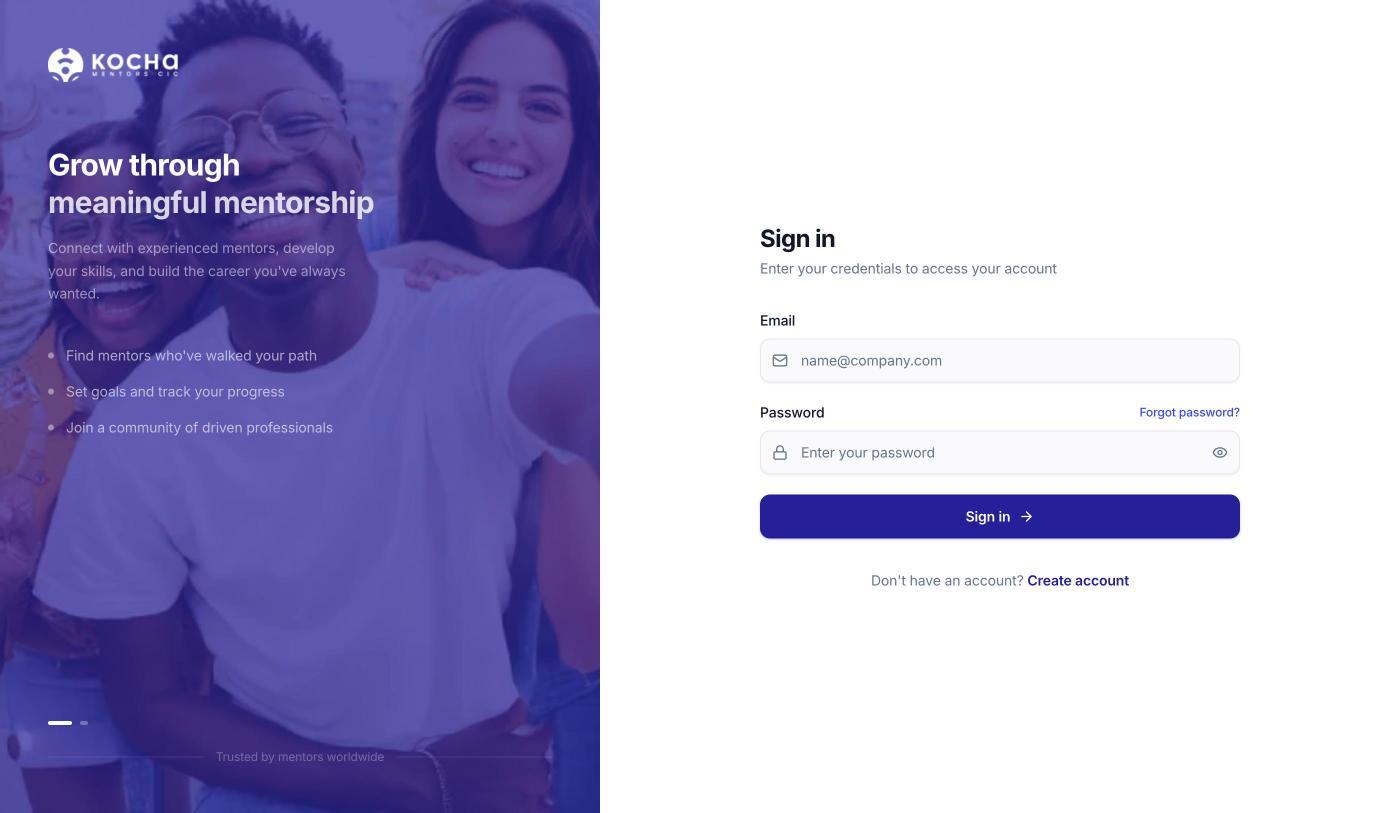 Kocha sign-in screen
What it does
For mentees: discover mentors, send mentorship requests, book sessions, subscribe to mentor packages, set and track goals, join community groups, attend events, and chat with their mentor in real time.
For mentors: review incoming requests, manage their mentees, run sessions, publish service packages, track their impact, and communicate directly with the people they're guiding.
For admins: oversee the community, approve mentors, create events and groups, manage users, and keep the platform running.
Everyone starts with an onboarding flow tailored to who they are, and every authenticated user sees a menu shaped around their role and their approval status — there's no single homogeneous experience.
What makes it interesting
- Three roles, one product. Twenty-plus pages, one design system, one codebase. The menu, the dashboards, and the available actions all change based on who's signed in — but the underlying product is unified.
- Real-time chat built in, not bolted on. Conversations, typing indicators, rich text, and emoji are part of the core experience, not a separate add-on.
- Fully themeable. The whole design is built on a token system, so a rebrand or a dark mode is a one-file change.
- Built to grow. Feature code is kept together so adding a new module doesn't reach into every corner of the codebase.
What I took away
- Designing a role-based product that serves three audiences from one shell — without creating three separate apps
- Building and maintaining a consistent design system across a 20+ page application
- Shipping a polished, production-ready UI end-to-end as a solo engineer
Links
Next project
AccraBeds
Real-time digital infrastructure giving ambulance dispatchers, families, and walk-in patients instant visibility into hospital emergency bed availability across Accra.